

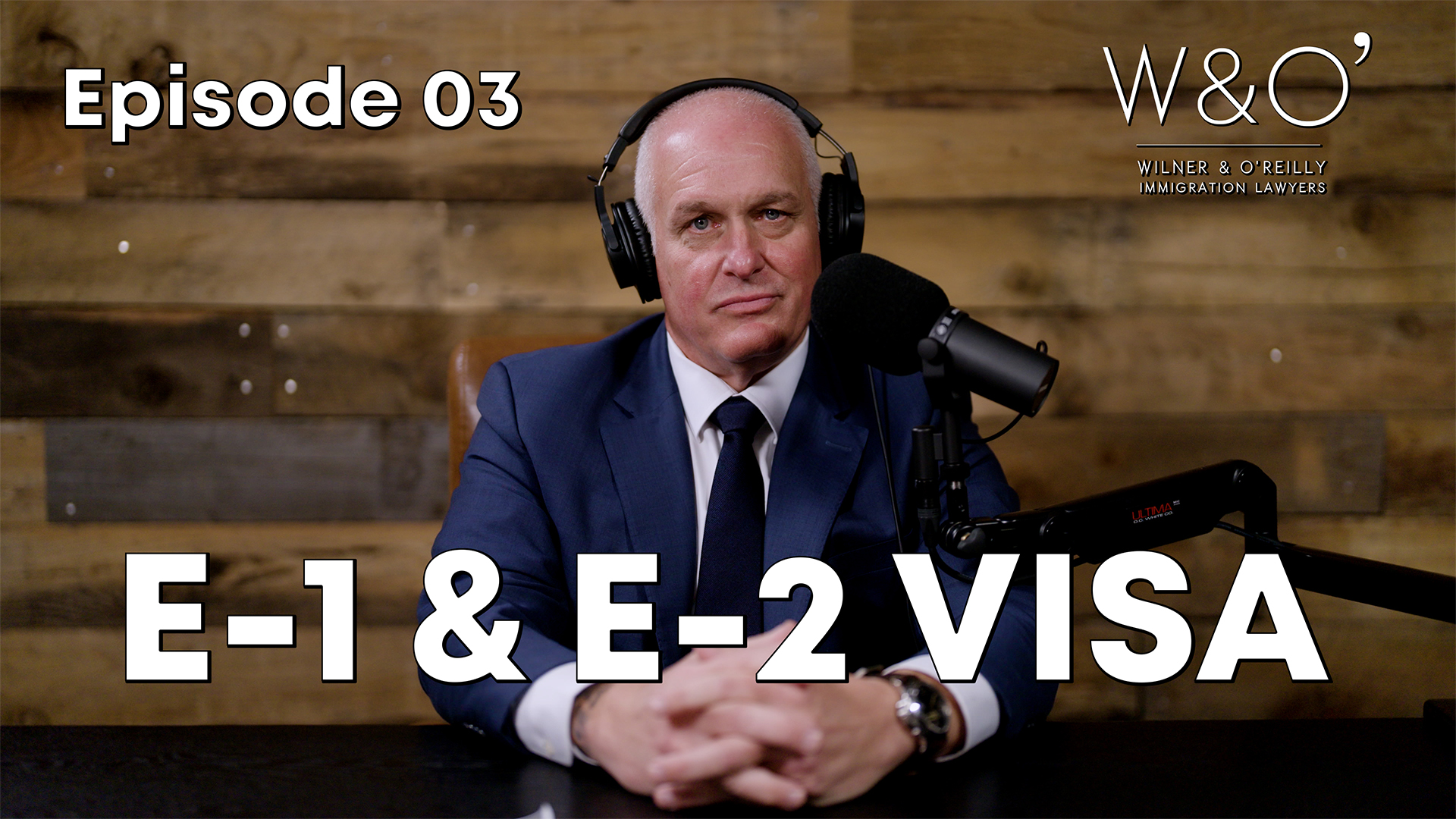
In Episode 3 of the ImmiGreat Podcast, Richard Wilner breaks down the differences between the E-1 Treaty Trader visa and the E-2 Treaty Investor visa, two powerful options for entrepreneurs and investors looking to do business in the United States.
As a founding partner of Wilner & O’Reilly and a Board-Certified Specialist in Immigration and Nationality Law, Richard explains these categories in clear, practical terms designed to cut through misinformation and online confusion.
What This Episode Covers
In this episode, Richard explains:
• What the E-1 and E-2 visas are and who they are designed for
• The importance of nationality and treaty country eligibility under Friendship, Commerce and Navigation (FCN) treaties (https://travel.state.gov/content/travel/en/us-visas/employment/treaty-trader-investor-visa-e.html)
• The difference between “trade” (E-1) and “investment” (E-2)
• How “substantial trade” under the E-1 requires at least 50% trade between the U.S. and the treaty country
• Why “substantial investment” under the E-2 is not defined by a fixed dollar amount
• How the nature of the business impacts what qualifies as substantial investment
• Ownership and nationality rules for privately held and publicly traded companies
• Employee eligibility categories, including executive, managerial, and essential workers
• The flexibility of E visas compared to L-1 visas, including the absence of a one-year pre-employment requirement
Richard emphasizes that while many people casually refer to E visas as “entrepreneur visas,” eligibility depends on strict treaty requirements and careful structuring of ownership, investment, and operational plans.
Key Takeaways for Entrepreneurs and Investors
The E-1 visa is generally appropriate for companies engaged in substantial trade between the United States and a qualifying treaty country. The majority of the trade must flow between the U.S. and that country.
The E-2 visa, by contrast, focuses on investment. The law does not define “substantial” with a specific dollar threshold. Instead, adjudicators evaluate the proportionality of the investment relative to the type of business being launched . A capital-intensive business may require significantly more investment than a service-based enterprise.
Another important distinction is flexibility. Unlike the L-1 visa category, E-1 and E-2 visas do not require a prior year of employment abroad, making them particularly attractive for entrepreneurs building new ventures in the United States .
Watch or Listen
You can watch the full episode or listen to the audio version below:
• Watch the episode: [YouTube link embedded on page]
• Listen to the episode: [Audio link embedded on page]
About the ImmiGreat Podcast
The ImmiGreat Podcast, hosted by Richard Wilner, provides straightforward insight into complex areas of U.S. immigration law. Each episode is designed to give entrepreneurs, employers, and professionals real information they can use to plan their futures.
If you are considering an E-1 or E-2 visa or evaluating business immigration options, contact Wilner & O’Reilly at https://www.wilneroreilly.com/contact/ or explore additional resources on our Immigration Blog at https://www.wilneroreilly.com/blog.
Comments are closed.