

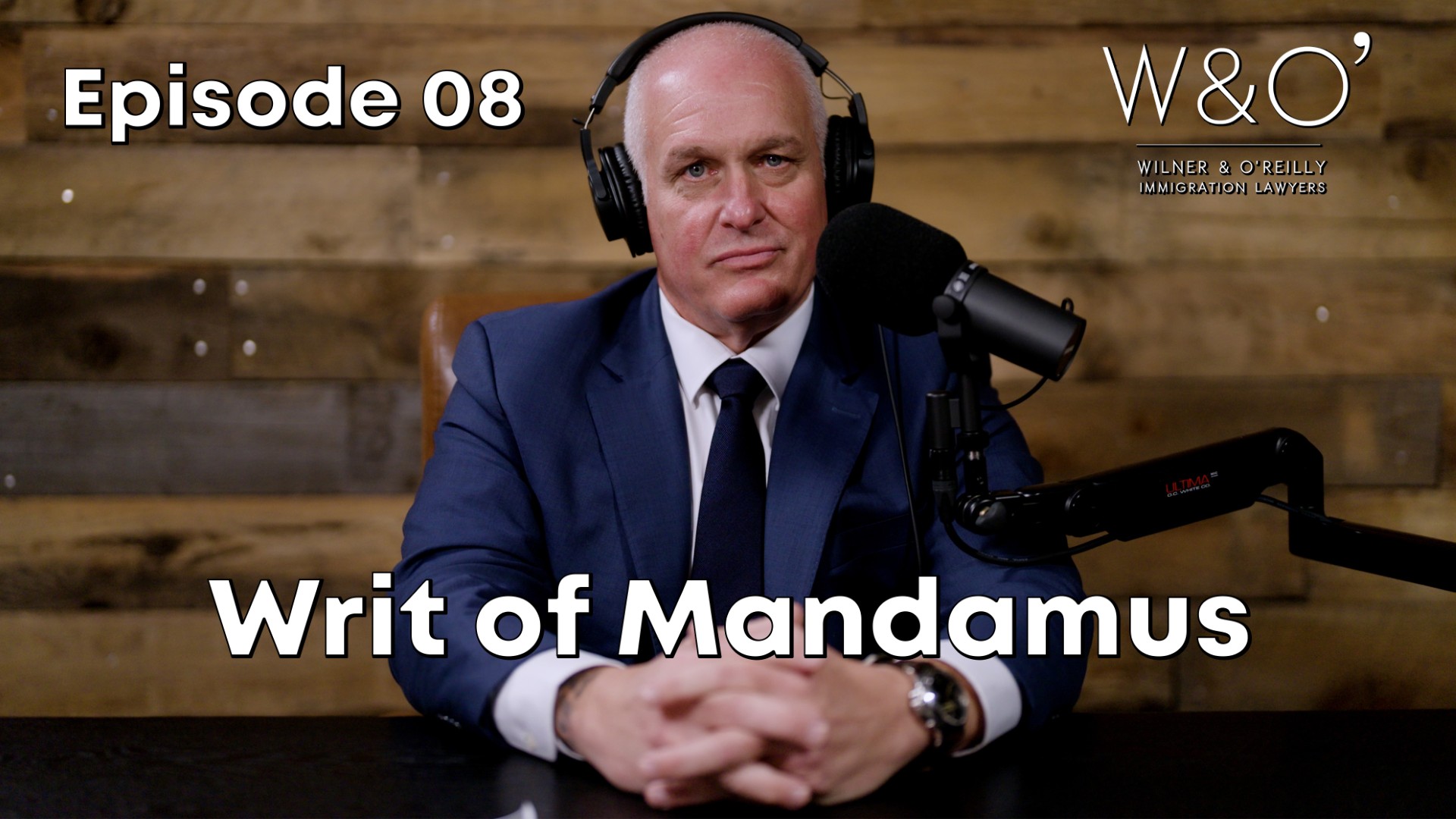
In Episode 8 of the ImmiGreat Podcast, Richard Wilner explains one of the most powerful—but often misunderstood—tools in immigration law: the writ of mandamus.
As a Founding Shareholder of Wilner & O’Reilly and a Board-Certified Specialist in Immigration and Nationality Law, Richard walks through how federal litigation can be used to address unreasonable government delays and move stalled immigration cases forward.
What Is a Writ of Mandamus?
A writ of mandamus is a federal lawsuit filed in U.S. District Court that asks a judge to order the government to take action on a delayed case.
The key concept is simple:
A mandamus action does not ask the court to approve your case—it asks the court to force the government to act.
As Richard explains, the word “mandate” means to act. That is exactly what this legal tool is designed to do when immigration applications remain pending far beyond normal processing times.
When Should You Consider a Writ of Mandamus?
Mandamus is typically used when a case has been pending for an unreasonable amount of time with no decision or meaningful progress.
One of the most common examples is asylum:
- Some asylum cases have been pending 5–8+ years without an interview
- In those situations, mandamus may be an appropriate strategy
However, this tool is not limited to asylum cases.
It may also apply to:
- Marriage-based green card applications
- Naturalization (citizenship) applications
- Consular processing delays
- Other immigration petitions stuck beyond normal timelines
How the Mandamus Process Works
The process begins with filing a complaint in federal court.
From there:
- The complaint is filed in U.S. District Court
- The government is formally served
- The government has 60 days to respond
- In many cases, the U.S. Attorney’s Office may request additional time
- The agency reviews the case internally
At that point, one of several outcomes may occur:
- The case is scheduled for action (such as an interview)
- The government files a response or motion to dismiss
- The case proceeds to a hearing before a federal judge
In many situations, cases begin moving forward before a court hearing is even necessary.
What Happens If the Government Pushes Back?
The government may argue that:
- The delay is justified
- Resources are limited
- The applicant is attempting to “jump the line”
If that happens, the case may proceed with:
- A motion to dismiss
- Opposition filed by your attorney
- A hearing before a federal judge
Ultimately, the court evaluates whether the delay is unreasonable under the law.
What Does Success Look Like?
A successful writ of mandamus does not mean automatic approval.
Instead, it typically results in:
- An interview being scheduled
- A decision being issued
- Movement in a previously stalled case
The goal is progress—not a guaranteed outcome.
As Richard emphasizes, the purpose is to ensure the government fulfills its obligation to adjudicate your case .
Why Timing Matters
Immigration delays are becoming increasingly common, but not every delay qualifies for mandamus.
Key considerations include:
- How long the case has been pending
- Normal processing times for similar cases
- Whether the delay is truly outside the norm
Evaluating timing correctly is critical to determining whether a mandamus action is appropriate.
Key Takeaways
A writ of mandamus can be a powerful tool when used strategically.
Key points to remember:
- It is a federal lawsuit to force government action
- It does not guarantee approval—only movement
- It is commonly used for long-delayed cases like asylum and naturalization
- Many cases resolve once the lawsuit is filed
- Proper legal evaluation is essential before filing
Watch or Listen
Watch the full Episode 8 here:
https://youtu.be/urmWgFRtA1Q
Listen to the podcast:
https://www.buzzsprout.com/2571796/episodes/18962120
Need Help With a Delayed Immigration Case?
If your immigration case has been pending for years without progress, it may be time to explore your legal options.
Contact Wilner & O’Reilly to discuss your situation:
https://www.wilneroreilly.com/contact/
For more insights, visit our Immigration Blog:
https://www.wilneroreilly.com/blog
About the ImmiGreat Podcast
The ImmiGreat Podcast, hosted by Richard Wilner, provides practical, real-world insight into complex immigration topics affecting individuals, families, and employers. Each episode is designed to help listeners better understand their options and next steps.
Comments are closed.