

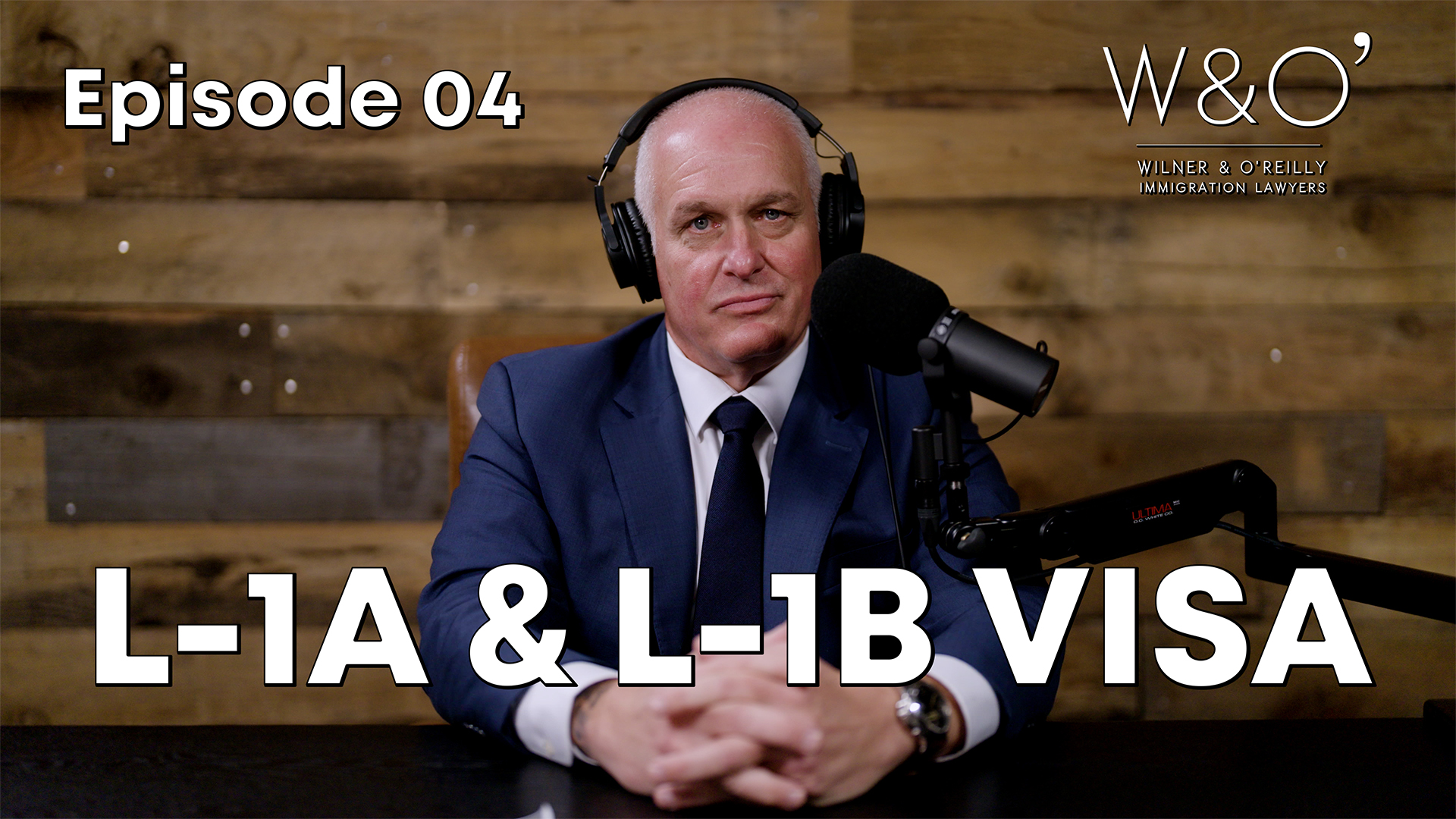
In Episode 4 of the ImmiGreat Podcast, Richard Wilner explains the L-1A and L-1B visa categories and how multinational companies transfer executives, managers, and specialized knowledge employees to the United States.
As a Founding Shareholder of Wilner & O’Reilly and a Board-Certified Specialist in Immigration and Nationality Law, Richard provides a clear overview of how the L-1 visa works and who qualifies .
What Is the L-1 Visa?
The L-1 visa is a company-to-company transfer visa. It allows a multinational company to transfer certain employees from a foreign office to a U.S. branch, subsidiary, or affiliate.
Unlike treaty-based visas such as the E-1 or E-2, the L-1 visa does not require nationality from a treaty country . It is available to qualifying companies and employees from most countries worldwide.
The formal legal term is “intracompany transferee.”
L-1A vs. L-1B: What’s the Difference?
There are two primary categories:
L-1A – Executives and Managers
This category is for individuals working in executive or managerial roles. These positions are strategic in nature and not hands-on operational roles .
L-1A visas are commonly used for:
- Senior executives
- High-level managers
- Business leaders opening or running U.S. operations
Maximum duration: 7 years
L-1B – Specialized Knowledge Employees
This category is for employees with specialized knowledge of the company’s products, services, systems, or operations .
These are typically employees involved in day-to-day operational work but who possess advanced, proprietary, or company-specific expertise.
Maximum duration: 5 years
The One-Year Overseas Employment Requirement
One of the most important requirements of the L-1 visa is the one-year employment rule.
The employee must have worked for the foreign company for at least one continuous year within the previous three years in an executive, managerial, or specialized knowledge role .
This is a key distinction from E-1 and E-2 visas, which do not require prior overseas employment.
L-1 New Office vs. Established Office
The L-1 visa can be used for:
1. Established U.S. Offices
If the U.S. branch, subsidiary, or affiliate already exists, the initial approval is typically granted for up to three years .
2. L-1 New Office
If the company is opening a brand-new U.S. office, the initial approval is limited to one year .
After that year, the company must demonstrate that the U.S. operation is active and viable before extensions are granted.
How the L-1 Process Works
The process begins with filing a petition in the United States.
If the employee is already in lawful status inside the U.S., and the petition is approved, they may change status without leaving the country .
If the employee is overseas, once the petition is approved, they will schedule a visa appointment at a U.S. consulate. Upon approval, the visa is placed in the passport, and the employee may enter the United States in L-1 status .
L-2 Visas for Spouses and Children
Spouses and children under 21 may receive L-2 dependent status.
Important benefits include:
- Spouses in L-2 status are authorized to work in the United States without applying separately for work authorization .
- Children may attend school in the United States .
- Children must change to another visa category (such as F-1) before turning 21 to maintain lawful status .
Can an L-1 Lead to a Green Card?
While this episode focuses on the non-immigrant process, L-1 visas—particularly L-1A—often serve as a pathway to employment-based green card options.
Strategic planning early in the process is critical for companies and employees considering long-term U.S. operations.
Who Should Watch This Episode?
This episode is ideal for:
- Business owners expanding to the U.S.
- Multinational companies establishing U.S. operations
- Executives and managers transferring internationally
- Specialized knowledge employees
- Families exploring U.S. relocation options
Watch or Listen
Watch the full episode here:
https://www.youtube.com/watch?v=kWNAdNdlX7c&feature=youtu.be
For more information about L-1 visas and business immigration strategy, visit:
https://www.wilneroreilly.com
To speak with our team directly:
https://www.wilneroreilly.com/contact/
For additional immigration insights, visit our blog:
https://www.wilneroreilly.com/blog
Comments are closed.