

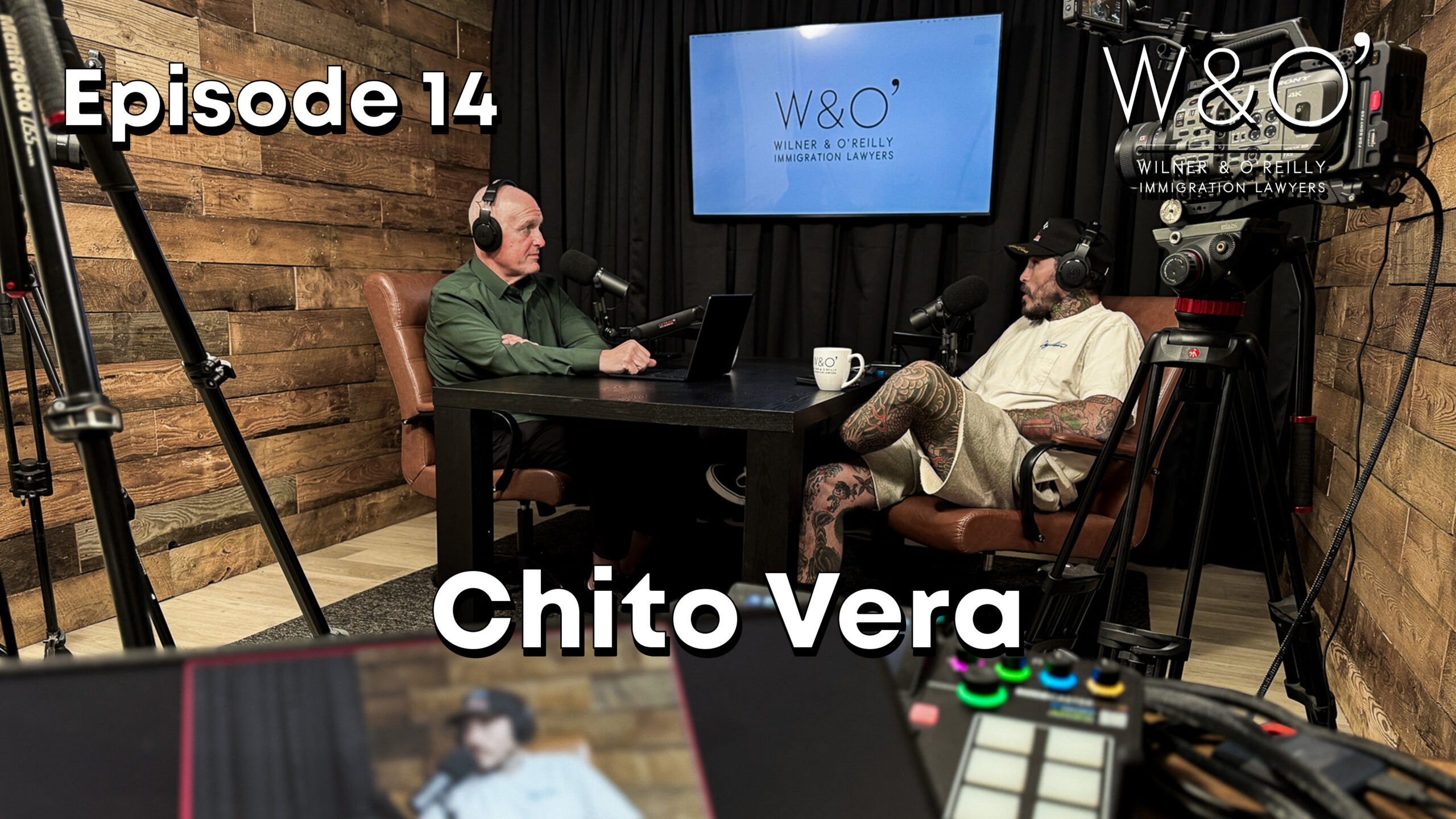
In Episode 14 of the ImmiGreat Podcast, Wilner & O’Reilly immigration attorney Richard Wilner sits down with UFC Bantamweight contender Marlon “Chito” Vera for one of the most personal conversations in the series so far.
While many fans know Chito Vera as one of the most accomplished fighters in UFC Bantamweight history, this episode focuses on something much deeper than fighting. It explores immigration, sacrifice, fatherhood, identity, and the relentless mindset required to build a life in the United States while carrying the weight of family responsibilities and immigration uncertainty.
This episode offers a rare behind-the-scenes look at what many immigrant families experience — uncertainty, separation, visa challenges, financial pressure, and the emotional reality of starting over in a new country.
Growing Up in Ecuador
Chito Vera begins the episode by describing his childhood in Chone, Ecuador, a life filled with family, farms, horses, rivers, and close community ties. Although he did not grow up wealthy, he describes his upbringing as deeply fulfilling and grounded in strong family values.
He recalls spending time on farms with relatives, riding horses, working alongside laborers, and growing up in a culture where family support was central to everyday life.
Throughout the conversation, Chito repeatedly emphasizes that while he may not have had luxury growing up, he “had everything he needed.”
The Medical Crisis That Changed Everything
One of the most emotional parts of the episode centers on the birth of Chito Vera’s daughter, Ana.
Shortly after she was born, doctors informed the family that she had Möbius syndrome, a rare neurological condition affecting facial muscles and movement. Chito explains how the diagnosis completely changed the direction of his life and ultimately became one of the driving reasons behind his move to the United States.
As the family researched treatment options, they discovered that some of the leading specialists capable of helping their daughter were located in Los Angeles.
That realization planted the seed that the United States — and specifically Southern California — might offer opportunities and medical resources unavailable back home.
Leaving Family Behind to Chase Opportunity
One of the most powerful themes in the episode is sacrifice.
Chito explains that early in his UFC career, he realized Ecuador did not have the training infrastructure necessary for him to compete at the highest level. He made the difficult decision to leave his wife and children behind temporarily while he moved to the United States alone to train full time.
He describes living in fighter housing, teaching classes, cleaning gyms, and sending whatever money he earned back home to Ecuador.
The emotional weight of that separation is one of the defining moments of the interview.
At one point, Chito describes sitting alone on weekends in the United States questioning whether he had made the right decision and wondering if he should simply return home and abandon fighting entirely.
Instead, he pushed forward.
What Is the “Immigrant Mentality”?
A central concept discussed throughout the episode is what Chito calls the “immigrant mentality.”
Inspired in part by conversations he heard from Joe Rogan about immigrant work ethic and sacrifice, Chito describes the immigrant mentality as the willingness to leave comfort behind, embrace uncertainty, and continue fighting forward despite setbacks.
For Chito, immigration was never simply about pursuing fame or money.
It was about:
- Creating medical opportunities for his daughter
- Building a better future for his children
- Providing stability for his family
- Creating long-term opportunity through sacrifice and discipline
His story reflects a reality shared by many immigrants — that immigration is often deeply tied to family survival, not simply personal ambition.
UFC Fighter Visas: P-1 and O-1 Immigration Challenges
The episode also provides valuable insight into the immigration process professional athletes face when competing internationally.
Richard Wilner and Chito discuss:
- P-1 athlete visas
- O-1 extraordinary ability visas
- Visa stamping at U.S. embassies abroad
- Immigration uncertainty for athletes
- Transitioning from temporary visas to permanent residency
Chito explains the stress of traveling internationally while relying on temporary visa status, including moments where he feared being unable to re-enter the United States after fights abroad.
He also describes how obtaining a green card fundamentally changed his sense of stability and security in the United States.
The conversation offers real-world insight into how immigration law impacts professional athletes, entertainers, and other internationally recognized individuals.
Why Green Cards Matter
One of the most important moments in the interview comes when Chito explains the emotional importance of becoming a lawful permanent resident.
As he points out, temporary visas can disappear overnight if employment changes or careers shift. A green card creates long-term stability for families, children, housing, employment, and future citizenship opportunities.
Chito also emphasizes something Richard Wilner frequently discusses with clients:
Doing things “the right way” may take longer and involve sacrifice, but it creates permanent security that cannot easily be taken away.
Immigration Advice from Chito Vera
Throughout the episode, Chito repeatedly returns to several themes:
- Stay away from legal trouble
- Continue working hard
- Keep looking for opportunities
- Don’t give up after setbacks
- Be patient with the immigration process
- Keep building toward long-term stability
He acknowledges that the immigration process can be frustrating and uncertain, but stresses that persistence and discipline matter.
One of the strongest messages from the episode is that success often comes from enduring years of uncertainty while continuing to move forward anyway.
Maintaining Ecuadorian Identity While Building a Life in America
Despite building his career and family life in the United States, Chito remains deeply connected to Ecuador.
He explains why he proudly carries the Ecuadorian flag into every UFC fight and why representing Ecuador matters to him personally.
For many immigrants, this balancing act feels familiar:
- Building a future in the United States
- While still honoring the culture and identity they came from
The episode highlights how immigration does not erase identity — it expands it.
A Conversation Bigger Than Fighting
Although Chito Vera is known worldwide for fighting, this episode ultimately becomes a conversation about perseverance, identity, fatherhood, and resilience.
It is one of the most human and emotionally honest episodes of the ImmiGreat Podcast to date.
For immigrants, visa holders, green card applicants, international athletes, or families navigating uncertainty in the immigration system, Chito’s story offers something many people need to hear:
You are not alone in the struggle.
Watch Episode 14 of ImmiGreat
Episode 14:
From Ecuador to the UFC: Chito Vera on Family, Immigration & the Immigrant Mentality
Watch now:
https://youtu.be/nDOX4otGA40
Learn more about Wilner & O’Reilly Immigration Lawyers:
https://www.wilneroreilly.com
Explore more ImmiGreat Podcast episodes:
https://www.wilneroreilly.com/blog
FAQ: Chito Vera Immigration Story
What visa do UFC fighters use?
Most UFC fighters compete in the United States using P-1 athlete visas for internationally recognized athletes. Some later transition to O-1 visas or employment-based green cards.
What is a P-1 visa?
A P-1 visa allows internationally recognized athletes and entertainers to work temporarily in the United States.
What is an O-1 visa?
An O-1 visa is for individuals with extraordinary ability in fields such as athletics, science, arts, business, or entertainment.
Did Chito Vera immigrate from Ecuador?
Yes. Chito Vera moved from Ecuador to the United States while pursuing his UFC career and seeking medical opportunities for his daughter.
Why did Chito Vera move to the United States?
He moved to improve his MMA training opportunities and to access specialized medical treatment for his daughter.
Can athletes get green cards?
Yes. Many professional athletes pursue green cards through extraordinary ability or employment-based immigration categories.
What is the immigrant mentality?
In the episode, Chito describes the immigrant mentality as the willingness to sacrifice comfort, endure uncertainty, and continue working toward long-term goals despite obstacles.
Comments are closed.