

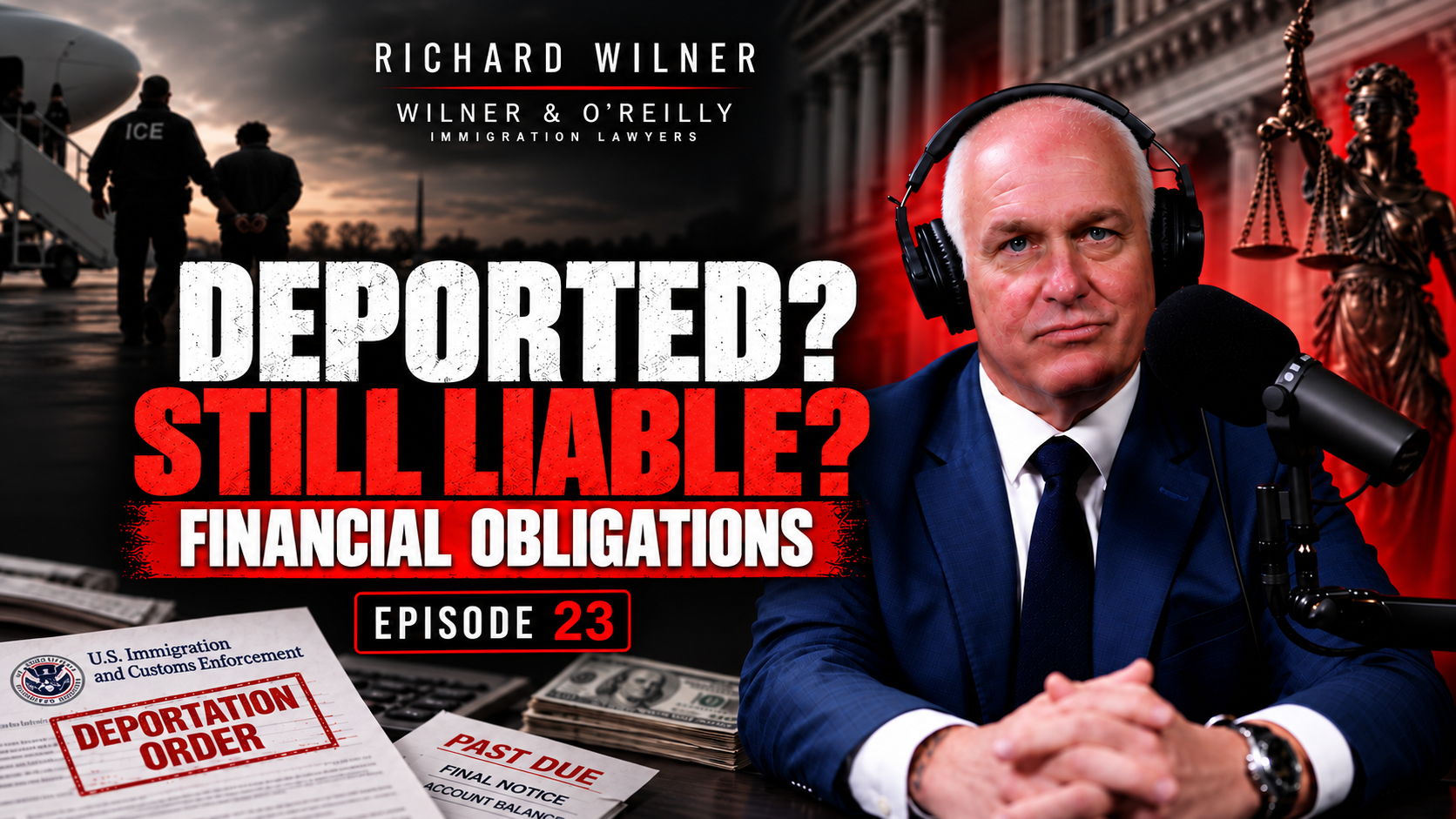
What happens to your home, car, and bank account after deportation? In Episode 23 of the ImmiGreat Podcast, Richard Wilner explains why an immigration case should be accompanied by a plan for your financial life. Removal does not, by itself, erase a mortgage, vehicle loan, business debt, or other contractual obligation.
This episode looks beyond immigration proceedings to powers of attorney, revocable trusts, and business continuity. The goal is practical: decide who can manage essential affairs if you are detained, removed, or otherwise unable to be present.
This article summarizes Episode 23 and provides general educational information. Wilner & O’Reilly practices immigration law; estate planning and business-succession documents require advice from lawyers who specialize in those areas.
Deportation Does Not Automatically Cancel Your Debts
Richard’s central point is that immigration consequences and financial obligations are separate. A removal order concerns your ability to remain in the United States. It does not automatically discharge a mortgage note, business loan, personal guarantee, lease, or agreement to pay for a vehicle.
For a homeowner, the immediate question may be who will make the mortgage payments and handle property matters. For a car owner, loan or lease payments still need attention. For someone with a business, payroll, loan payments, and contractual commitments may continue even when the owner is unavailable.
Missed payments can lead to default under the applicable agreement. Planning for detention or removal therefore includes reviewing payment arrangements, deadlines, and who has authority to act. The episode encourages families to address these issues alongside the immigration case, before a crisis makes paperwork harder to complete.
A Power of Attorney Can Help Someone Act in Your Absence
A financial power of attorney authorizes a designated agent to act on your behalf within the powers granted by the document. Richard discusses how a properly prepared document may allow an agent to manage bank accounts, address mortgage matters, or handle other financial transactions when you cannot be present.
For bank accounts, consider more than whether money is available. Who is legally authorized to pay bills or communicate with the institution? Does the document cover the transactions needed? Has counsel addressed the bank’s documentation and acceptance requirements?
The agent’s authority depends on the document, applicable law, and the circumstances. A durable power of attorney can continue through incapacity, but “durable” does not mean unlimited authority. Choose the agent carefully and discuss when the authority begins, its limits, and any backup agent with the drafting lawyer. The Consumer Financial Protection Bureau’s financial-caregiver guides explain the distinct roles of agents and trustees.
Revocable Trusts and Your Home Require Careful Review
Richard also discusses a revocable trust as a possible way to arrange property management. When property is properly transferred to a trust, the trustee’s authority comes from the trust and applicable law. That can help provide continuity if the person who previously handled the property is unavailable.
A trust transfer does not eliminate the mortgage or the obligation to make payments. Nor should every transfer be treated as automatically exempt from a loan’s due-on-sale clause. 12 U.S.C. § 1701j-3(d)(8) protects certain transfers into an inter vivos trust when the borrower remains a beneficiary and the transfer does not relate to a transfer of occupancy rights; the residential-property limitation in subsection (d) also applies.
Have estate-planning counsel review the loan, title, trust terms, and any notification or recording requirements before transferring property. A trust should be designed for your situation, rather than treated as a substitute for an individual review.
Business Continuity Starts With Clear Signing Authority
A successful business can face serious disruption if only one person can sign checks, approve payroll, or make essential decisions. In Episode 23, Richard highlights operating agreements and corporate bylaws as places to address successor managers or officers.
Business counsel can review who may act, what triggers a successor’s authority, and whether the company’s banking arrangements match its governing documents. A personal power of attorney and authority to act for an LLC or corporation are related planning questions, but they should not be assumed to be interchangeable.
A Planning Checklist to Discuss With Counsel
- List essential obligations: Identify mortgage and vehicle payments, leases, business loans, personal guarantees, and upcoming deadlines.
- Review financial access: Determine who has valid authority to manage accounts and payments if you are unavailable.
- Gather existing documents: Bring powers of attorney, trust documents, property and loan records, and business agreements to the appropriate lawyer.
- Plan for the business: Review payroll, authorized signers, successor management, and essential contacts.
- Coordinate the legal work: Discuss immigration options with immigration counsel and financial-continuity documents with estate-planning or business counsel.
Frequently Asked Questions
Does deportation cancel a mortgage or car loan?
No. Removal does not, by itself, discharge those obligations. The loan or lease terms and any separate legal remedies must be reviewed.
Can a family member automatically manage my bank account?
Do not assume that a family relationship supplies authority to transact on your behalf. Review account ownership, any power of attorney, and the institution’s requirements with counsel.
Does putting a home in a trust erase the mortgage?
No. Trust planning concerns ownership and management arrangements. The debt remains, and due-on-sale protections have conditions that counsel should assess.
Does Wilner & O’Reilly prepare estate plans or powers of attorney?
Richard explains that the firm does not draft powers of attorney, revocable trusts, or estate plans. W&O can identify planning gaps in connection with an immigration matter and help connect clients with appropriate specialists.
Watch or Listen to ImmiGreat Episode 23
Watch Richard Wilner’s discussion above or listen to What Happens to Your Home, Car & Bank Account After Deportation below.
Watch Episode 23 on YouTube or visit the episode on Buzzsprout.
Talk With Wilner & O’Reilly About Your Immigration Situation
If detention or removal could affect your family or business, contact Wilner & O’Reilly to discuss the immigration issues and whether a referral to estate-planning or business counsel is appropriate. For another discussion of financial obligations, explore Episode 22 on I-864 and H-1B financial risks.
About the ImmiGreat Podcast
Hosted by Richard Wilner, the ImmiGreat Podcast explores immigration law and the practical decisions facing immigrants, families, sponsors, and employers. Browse more ImmiGreat Podcast articles for related conversations.
Comments are closed.