

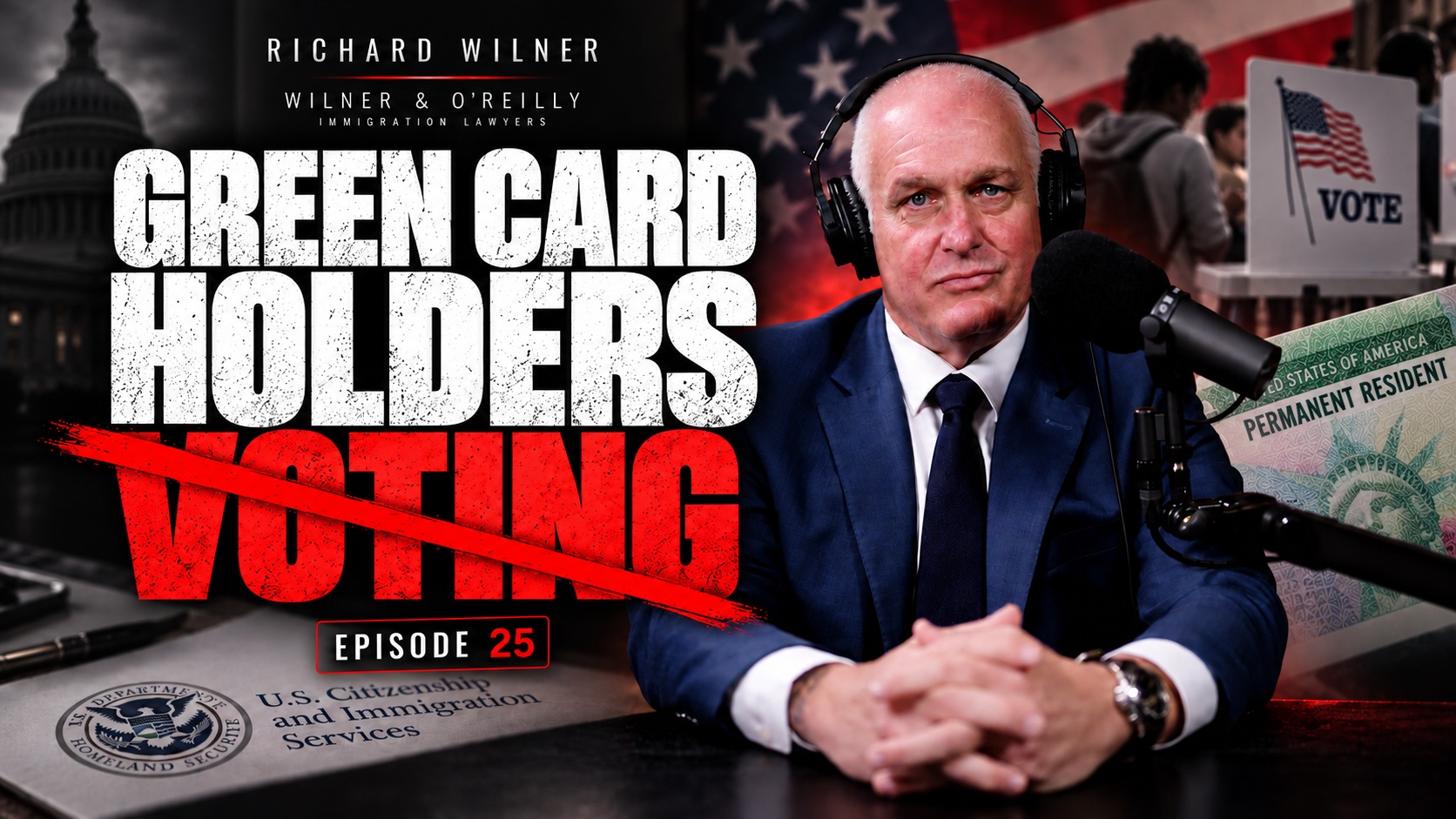
A green card does not give you the right to vote in a federal election. With Election Day approaching on Tuesday, November 3, 2026, Episode 25 of the ImmiGreat Podcast addresses a question permanent residents should understand before registering or casting a ballot.
Richard Wilner explains how unlawful voting, voter registration, and false claims to U.S. citizenship can affect a green card holder’s immigration future. His central message: review eligibility carefully and get legal advice about any past registration or voting before applying for naturalization.
This article summarizes Episode 25 and provides general educational information as of October 30, 2026. It is not individualized legal advice.
Can Green Card Holders Vote?
Lawful permanent residence and U.S. citizenship are different legal statuses. Permanent residents cannot vote in federal elections. Noncitizens also cannot vote in state and most local elections, according to USAGov’s voter eligibility guidance.
Some jurisdictions have limited rules permitting certain noncitizens to participate in particular local elections. These exceptions do not authorize voting for federal candidates or establish general voting eligibility. Confirm the specific rules and immigration implications with qualified counsel and the relevant election authority before relying on an exception.
Registration Can Create Problems Even Without a Ballot
Richard emphasizes that a problem can begin before Election Day. Voter registration may be offered during a driver’s license application or another government transaction. Being offered a form, receiving a registration card, or having a name appear on a voter list does not establish eligibility.
Read citizenship questions carefully. A false claim of U.S. citizenship made to register can have immigration consequences separate from whether someone actually votes. Registration, unlawful voting, and a false citizenship claim require distinct legal analysis; they should not be treated as interchangeable findings.
The episode also mentions employment paperwork. Form I-9 is an employment verification form, not a voter registration application. A false citizenship statement on employment paperwork can nevertheless raise a separate immigration issue.
Why This Can Surface During Naturalization
Richard explains that Form N-400 asks about voter registration and voting history. USCIS may investigate the answers and review election records. Concealing a past incident can create additional problems, so applicants should answer truthfully and obtain advice about how to document the circumstances.
The USCIS Policy Manual addresses unlawful registration, unlawful voting, false citizenship claims, and their relationship to naturalization. The analysis depends on the conduct, the applicable law, the evidence, and any exception. An old incident deserves review even if no one raised it when it happened.
Could Voting Lead to Deportation Proceedings?
Unlawful voting or a qualifying false citizenship claim can put immigration status at risk and may lead to removal proceedings. Richard discusses that risk and the importance of a prompt, careful review of the record.
Being placed in proceedings does not itself mean that a final removal order has been entered. Richard discusses cancellation of removal as one possible form of relief for certain permanent residents. Eligibility is limited, discretionary, and dependent on the person’s complete history. Relief is not guaranteed, and resolving a removal case does not automatically establish eligibility for citizenship.
What If You Think You Registered or Voted by Mistake?
Do not assume either that an error is harmless or that there is no possible solution. An attorney should examine what was submitted, who completed the form, what citizenship statement was made, whether a ballot was cast, and the relevant dates and election rules.
- Preserve records: Keep registration notices, forms, correspondence, and any relevant driver’s license or employment paperwork.
- Get advice before filing: Discuss the issue before submitting an N-400 or another immigration application.
- Be accurate: Do not conceal the history or submit a new explanation without understanding the underlying records.
- Review corrective steps: Ask counsel how to address any inaccurate registration and document the correction. Removing a name from a voter list does not by itself erase past conduct.
Frequently Asked Questions
Does having a green card allow me to vote in a federal election?
No. Lawful permanent residents are not eligible to vote in federal elections. A green card is not proof of U.S. citizenship.
Can voter registration affect naturalization if I never voted?
Yes, it can. The circumstances of registration, including any citizenship statement, need legal review even when no ballot was cast.
Does a past voting issue automatically mean deportation?
No single outcome applies to every case. The conduct, applicable law, exceptions, and eligibility for relief must be evaluated individually. Seek legal advice promptly.
Watch or Listen to ImmiGreat Episode 25
Watch Green Card Holders: Don’t Vote on Nov 3rd above, or listen to the episode below.
Watch Episode 25 on YouTube or visit the episode on Buzzsprout.
Review Your Immigration History Before Applying
If you are concerned about voter registration, a citizenship statement, or a past ballot, contact Wilner & O’Reilly to discuss your circumstances. For more conversations with Richard Wilner, browse the ImmiGreat Podcast articles.
Comments are closed.