

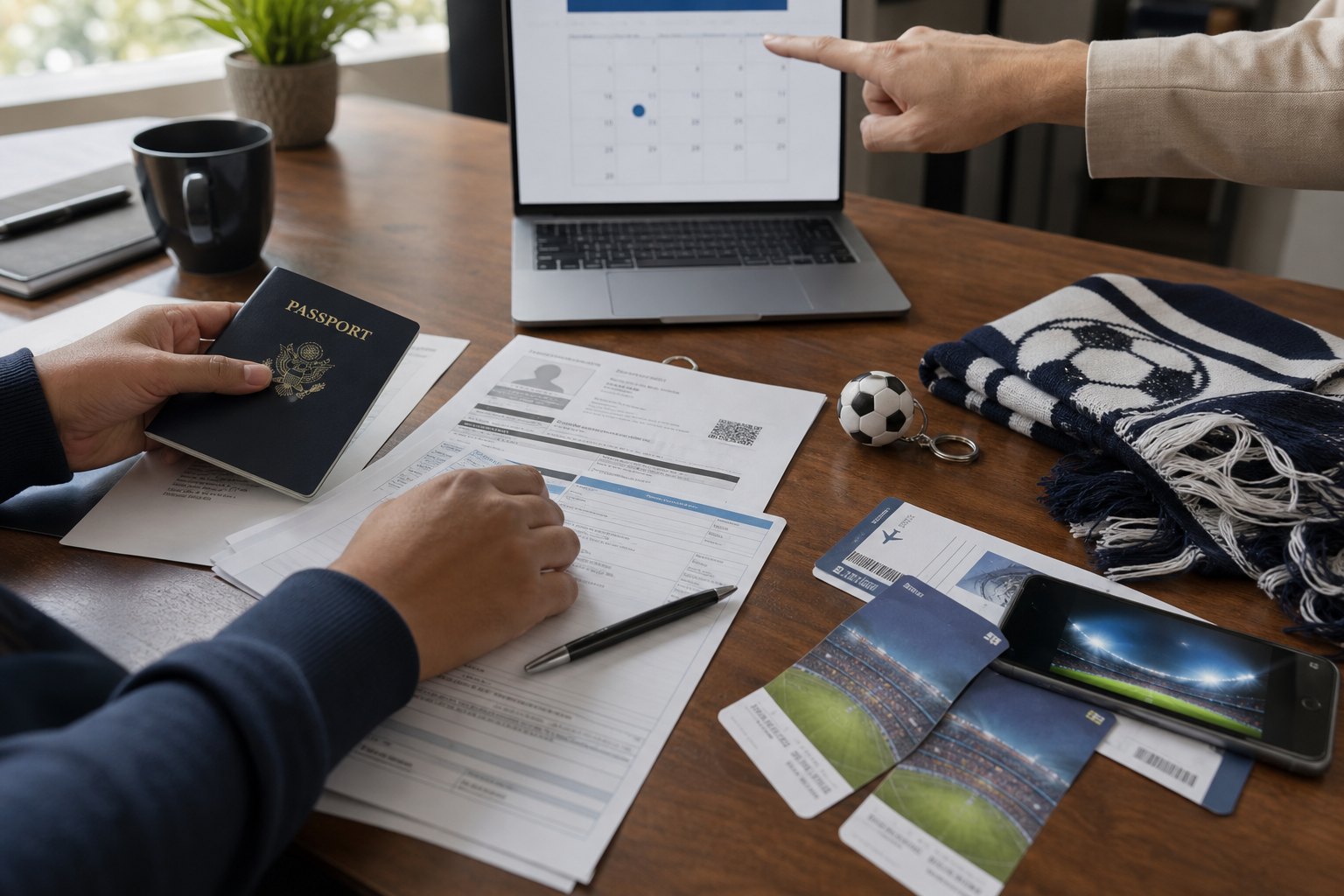
Understanding FIFA PASS for World Cup 2026 Ticket Holders
As the FIFA World Cup 2026 approaches, many international travelers are preparing to visit the United States to attend matches. For certain ticket holders, the U.S. Department of State has provided guidance on the FIFA Priority Appointment Scheduling System, commonly referred to as FIFA PASS. This system is designed to help eligible ticket holders access priority visa interview appointments.
It is important to understand that FIFA PASS is not a visa category, does not provide immigration status, and does not guarantee that a visa will be approved. Rather, FIFA PASS is a scheduling tool that may help eligible applicants obtain a visa interview appointment sooner than they otherwise might. At Wilner & O’Reilly, we understand how important timing can be when planning international travel, especially for a major event like the World Cup. Our team helps applicants understand the process, prepare the right documentation, and avoid mistakes that could delay or negatively affect their case.
Legal Framework Governing FIFA PASS and Visa Applications
Even when an applicant qualifies to use FIFA PASS, the normal visa rules still apply. Consular officers continue to evaluate every application under U.S. immigration law, including whether the applicant qualifies for the visa requested and whether any ground of inadmissibility applies. For many B visa applicants, section 214(b) remains a key issue, meaning applicants must demonstrate that they qualify as temporary visitors and have strong reasons to return home after their trip.
Holding World Cup tickets may help explain the purpose of travel, but it is not enough by itself to establish visa eligibility. Applicants should still be prepared to show financial ability, travel plans, ties to their home country, and the intent to depart the United States after the visit. FIFA PASS may help secure an interview appointment, but the applicant must still present a strong and complete case at the interview.
Initial Steps for Using FIFA PASS
Eligible applicants should begin by completing the DS-160 visa application in the ordinary course. After that, they must create or log into their FIFA account and submit the FIFA PASS opt-in form. Once the opt-in is completed, the applicant should save the unique FIFA PASS key generated by the system.
The applicant then proceeds to the appropriate country-specific visa scheduling website, such as ustraveldocs.com or the relevant equivalent for that location. During the scheduling process, the applicant identifies themselves as a FIFA ticket holder and enters the FIFA PASS key to access the priority appointment pool.
Accuracy is extremely important. Passport details, biographic information, and DS-160 information should match across the FIFA registration and visa application materials. Any mismatch may lead to rescheduling, cancellation, or additional complications. Before submitting information, applicants should carefully review every field for consistency.
FIFA PASS Appointment Procedures: Important Legal Considerations
FIFA PASS is available only to individuals who purchased official match tickets directly from FIFA. It is a voluntary priority scheduling program and should not be confused with a visa benefit or special immigration classification. Applicants should also understand that using FIFA PASS does not change the maximum validity period or number of entries available for a visa. Those rules continue to depend on the applicant’s nationality and the applicable reciprocity schedule.
Applicants should also be aware that FIFA PASS generally does not allow individuals to apply outside their country of nationality or residence. This is an important issue for individuals considering third-country national processing. Before relying on any scheduling strategy, applicants should confirm whether the intended consular post will accept the case.
For applicants from countries subject to visa bond requirements, FIFA PASS does not automatically remove the obligation to pay a bond. Some narrow exceptions may apply for specific categories of World Cup-related travelers, such as certain athletes, team members, or immediate relatives, but these situations should be reviewed carefully. Applicants who are required to post a bond must also follow the applicable entry and exit requirements, including any designated airport restrictions.
FIFA PASS and World Cup Visa Applications: Frequently Asked Questions and Official Resources
At Wilner & O’Reilly, we encourage applicants to review official guidance and prepare early. World Cup-related travel may create increased demand for visa interviews, and appointment availability can shift depending on the consular post. Applicants should monitor the relevant visa scheduling website and any post-specific instructions.
Those who already have scheduled appointments should carefully review whether keeping the current appointment or attempting to use FIFA PASS is the better strategy. In some circumstances, an existing appointment may be the most efficient option. In others, FIFA PASS may provide access to a more suitable appointment date. Each case should be evaluated based on the appointment date, travel plans, visa category, and the applicant’s individual circumstances.
- Applicants should take the following steps when preparing for a FIFA PASS-related visa appointment:
- Carefully complete and review the DS-160 before scheduling.
- Save proof of official FIFA ticket purchase.
- Save the FIFA PASS opt-in confirmation and unique FIFA PASS key.
- Make sure passport and biographic details match across all systems.
- Prepare evidence of financial ability to cover travel, lodging, and expenses.
- Gather documentation showing strong ties to the home country.
- Review whether any prior visa denial, overstay, or immigration issue may affect eligibility.
- Consult experienced immigration counsel before making major scheduling or reapplication decisions.
Building a Strong Visa Application for World Cup 2026 Travel
A successful visa application should clearly explain the purpose of travel and provide evidence supporting the applicant’s eligibility. For World Cup travelers, this may include ticket confirmations, travel itinerary details, hotel reservations, employment letters, family ties, property ownership, financial records, and evidence of planned return.
However, the strongest applications are not limited to event-related documents. Consular officers often focus on whether the applicant has sufficient ties abroad and whether the proposed trip is temporary. Applicants should be prepared to answer questions about employment, family, finances, prior travel, and the reason for visiting the United States.
If the applicant has a prior visa refusal, it is especially important to understand the reason for that refusal before applying again. Reapplying without addressing the original concern may lead to another denial. Our attorneys help applicants evaluate prior refusals, correct weaknesses, and prepare more complete evidence for the next application.
Did you know? FIFA PASS may help eligible World Cup ticket holders access priority visa appointment scheduling, but it does not guarantee visa approval. Applicants must still prove that they qualify under U.S. immigration law.
How Professional Legal Guidance Can Help with FIFA PASS and Visa Preparation
World Cup travel can involve strict timing, high demand for appointments, and complex eligibility questions. By working with experienced immigration attorneys, applicants can better understand whether FIFA PASS applies to their situation and how to prepare for the visa interview.
At Wilner & O’Reilly, we help clients review their DS-160, organize supporting documents, identify possible red flags, and prepare for consular questioning. Our goal is to help applicants avoid preventable mistakes and present their case as clearly and effectively as possible.
Preventing Common Mistakes in the FIFA PASS Process
Common mistakes include entering inconsistent passport information, failing to save the FIFA PASS key, assuming FIFA PASS guarantees visa approval, or relying only on World Cup tickets as proof of eligibility. Applicants may also misunderstand whether they can apply outside their country of nationality or residence.
Another frequent issue is failing to prepare for 214(b) concerns. Even when the purpose of travel is legitimate, applicants must still show that they intend to return home. Strong preparation can help reduce the risk of confusion or avoidable denial.
Applicants should also avoid waiting until the last minute. As the World Cup approaches, demand for appointments may increase, and consular procedures may change. Timely preparation gives applicants a better opportunity to address problems before the interview.
Final Thoughts on FIFA PASS Appointment Procedures for World Cup 2026 Visa Applicants
FIFA PASS can be a helpful scheduling tool for eligible World Cup 2026 ticket holders, but it should be used with a clear understanding of its limits. It does not replace the visa application process, waive ordinary legal requirements, or guarantee admission to the United States. Applicants must still prepare a complete and credible visa application.
Each case is different. Factors such as nationality, visa category, prior denials, financial circumstances, and ties abroad can all affect the outcome. We encourage World Cup travelers to seek professional legal guidance before relying on FIFA PASS or making important visa scheduling decisions. With careful preparation, applicants can approach the process with greater confidence and clarity.
FAQ
What is FIFA PASS?
FIFA PASS is the FIFA Priority Appointment Scheduling System. It allows certain official FIFA World Cup 2026 ticket holders to access priority visa interview scheduling. It is not a visa and does not guarantee approval.
Who can use FIFA PASS?
FIFA PASS is available only to individuals who purchased official match tickets directly from FIFA and completed the required opt-in process. Applicants must also follow the visa scheduling procedures for the appropriate country.
Does FIFA PASS guarantee that my visa will be approved?
No. FIFA PASS only relates to appointment scheduling. A consular officer must still determine whether you qualify for the visa under U.S. immigration law.
Do I still need to complete the DS-160?
Yes. Applicants must complete the DS-160 in the ordinary course before using the appropriate visa scheduling system.
What information should match across FIFA PASS and my visa application?
Your passport information, biographic details, and DS-160 information should be consistent across all systems. Mismatches may cause delays, cancellation, or rescheduling issues.
Can I use FIFA PASS to apply outside my country of nationality or residence?
Generally, FIFA PASS is not available to applicants seeking to apply outside their country of nationality or residence. Applicants should confirm post-specific rules before making plans.
Does FIFA PASS apply only to B visitor visas?
Many World Cup travelers will apply for B visas, but applicants should review the rules for their specific visa category and consular post. Eligibility and scheduling practices may vary.
What if I already have a visa interview scheduled?
Applicants with existing appointments should carefully review current guidance before changing anything. In some cases, keeping the existing appointment may be better than attempting to reschedule.
What documents should I bring to the interview?
Applicants should bring standard visa documentation, proof of FIFA ticket purchase, FIFA PASS confirmation, the unique FIFA PASS key, financial documents, travel plans, and evidence of strong ties abroad.
How can Wilner & O’Reilly help with FIFA PASS and World Cup visa applications?
Our attorneys can review your eligibility, identify potential issues, help organize supporting documents, prepare you for the visa interview, and guide you through the process with a strategy tailored to your circumstances.
Comments are closed.