

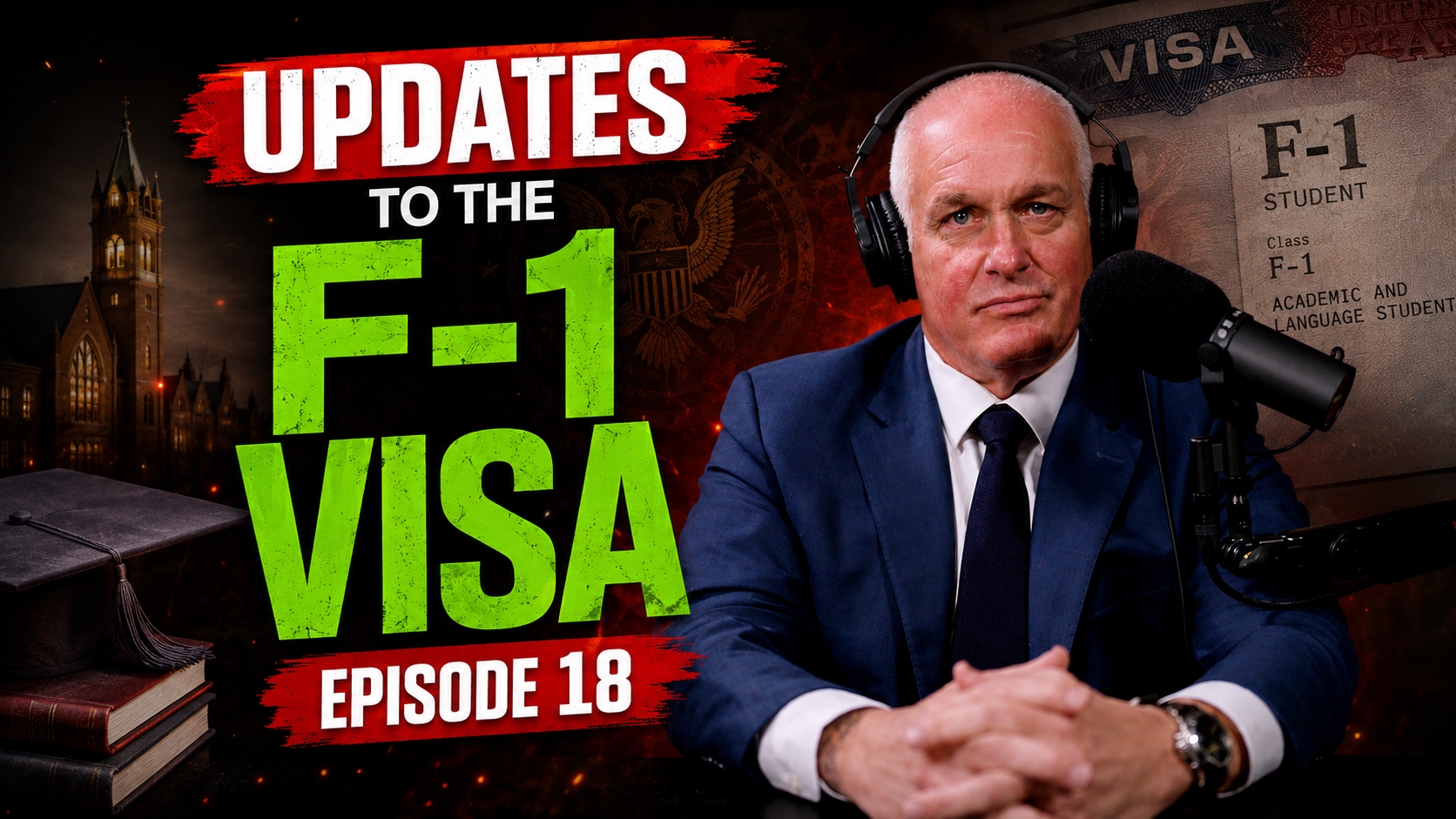
In Episode 18 of the ImmiGreat Podcast, Richard Wilner explains a major proposed change affecting international students and other temporary visitors in F-1, J-1, and I visa status.
On July 17, 2026, the Department of Homeland Security announced a rule that would replace the longstanding duration-of-status framework with a fixed admission period. The episode explains what the proposed rule would mean for international students, student athletes, exchange visitors, foreign media representatives, and anyone whose academic or exchange program may last longer than four years.
Richard also discusses the shorter grace period, the role of the I-20 and I-94, the additional process for extensions, and why students and schools should begin planning before the rule’s expected September 15 effective date if it survives congressional review and any litigation.
What Changed for F-1, J-1, and I Visa Holders?
For decades, many F-1 students, J-1 exchange visitors, and I visa holders were admitted for the duration of their status. In practical terms, that meant they could remain in the United States while they continued making academic or program progress and followed the rules of their status.
Richard explains that the July 17 rule would change that structure. Instead of relying on an open-ended duration-of-status admission, the traveler would receive a fixed period of admission, generally capped at four years or the length of the specific academic program shown on the I-20, whichever is shorter.
The change is significant because the visa stamp in a passport is not the document that controls the length of a person’s authorized stay. The I-94 record issued at admission is the key record for determining the authorized period in the United States.
Duration of Status Versus a Fixed Four-Year Period
Under the duration-of-status system, a student could generally remain in the United States while maintaining valid F-1 status, making normal academic progress, and following the requirements of the program. There was not necessarily a fixed expiration date stamped on the I-94 for the entire period of study.
Under the proposed framework, the admission period would be tied to a fixed end date. A four-year degree program may fit within the cap, but a longer course of study could require the student to request an extension before the admission period expires.
That distinction makes recordkeeping and advance planning more important. Students should understand the dates on their I-20 and I-94, monitor the progress of their program, and speak with their school and immigration counsel before an extension becomes urgent.
The Grace Period Would Be Reduced from 60 Days to 30 Days
Richard also highlights a proposed reduction in the post-program grace period. The current 60-day period would be changed to 30 days under the new rule.
A shorter grace period could affect students who need time to transfer schools, begin a new program, change status, prepare for departure, or coordinate the next step in an immigration strategy. Waiting until the end of a program could leave very little time to identify and resolve a problem.
A New I-20 Can Start a Fresh Four-Year Clock
One point Richard describes as favorable is that the proposed four-year period would generally be connected to a new academic level and a new I-20. Time spent in high school would not automatically subtract from the four-year period available for a later college program.
For example, a student who attends high school in the United States and later begins a four-year college program would receive a new period connected to the new I-20. Time would not simply carry over from one academic level to the next.
Why Student Athletes Could Face Special Challenges
The fixed four-year cap may create particular pressure for international student athletes. A standard four-year academic timeline does not always match the time needed to complete a degree and athletic eligibility.
Richard discusses situations involving medical redshirts, Olympic preparation, and gray-shirt arrangements. These circumstances can extend a student athlete’s time in college beyond four years, even when the student remains academically eligible and is following the rules of the program.
The transfer portal and name, image, and likeness opportunities add another layer of planning. Colleges, athletic departments, international student offices, and the students themselves will need to coordinate carefully before a transfer or program change creates a new immigration issue.
Ph.D. Programs and Other Programs Longer Than Four Years
Many doctoral programs and research programs can take longer than four years. Richard explains that the proposed rule would not necessarily force a student to leave school, but it could require an extension-of-stay request and a more formal review.
An extension may involve additional forms, filing fees, biometrics, fingerprinting, and renewed vetting of the student’s compliance with the immigration program. The practical lesson is straightforward: a student who may need more time should start preparing well before the fixed admission period expires.
When Would the New Rule Take Effect?
The rule was published in July, but the episode explains that a 60-day period follows publication. The expected effective date discussed by Richard is September 15, 2026.
Before then, the rule may be subject to congressional review or litigation. The final outcome could change the timing or substance of the policy. Students, schools, and families should therefore treat the September date as an important planning deadline while continuing to verify the current requirements.
Richard also explains that students already in valid status would not automatically have their existing admission documents converted to the new fixed period. The proposed rule would be prospective, although anyone affected by a future admission or extension should review the details carefully.
What International Students Should Do Now
International students should not rely on headlines or assume that every student’s situation will be treated the same way. The right response is to understand the proposed change, review the dates in the student’s immigration records, and plan early with the designated school official and qualified immigration counsel.
- Review the expiration dates and admission information on the I-94 and I-20.
- Ask whether the academic or exchange program may require more than four years.
- Student athletes should account for redshirts, medical absences, Olympic preparation, and possible transfers.
- Students in doctoral or other extended programs should learn the requirements for an extension before it is needed.
- Track the rule’s effective date and any changes resulting from review or litigation.
- Keep records of school enrollment, academic progress, travel, and status compliance.
Key Takeaways
- The July 17, 2026 announcement discussed in Episode 18 would affect F-1, J-1, and I visa admissions.
- The proposed framework would replace duration of status with a fixed admission period.
- Admission would generally be capped at four years or the length of the program on the I-20, whichever is shorter.
- The grace period discussed in the episode would be reduced from 60 days to 30 days.
- A new academic level and I-20 can create a new four-year period.
- Student athletes, Ph.D. students, and others in longer programs may need careful extension planning.
- The expected September 15, 2026 effective date may change if the rule is revised, blocked, or challenged.
- Knowledge of the law and early preparation are essential for protecting student status.
Listen to the full Episode 18 audio here:
Related Wilner & O’Reilly Resources
- Student Visa (F-1) Requirements Guide for International Students
- Navigating the Complexities of Student Visa Processing
- From F-1 Visa to Green Card: International Students USA Policy
- Expanded Visa Screening and Vetting for Immigration Applicants in 2026
- Student Visa (F-1) Lawyer
For official information, review the USCIS guidance for students and exchange visitors, the DHS Study in the States student resources, and information about Form I-539 applications to extend or change status.
Need Help With a Student or Exchange Visitor Case?
Whether you are an international student, student athlete, exchange visitor, foreign media representative, school, or family member, timely immigration guidance can help you understand how a change in admission rules may affect your plans.
If you have questions about F-1 or J-1 status, I-20 or I-94 dates, an extension of stay, the transfer portal, or the proposed rule, contact Wilner & O’Reilly to discuss your situation.
Read more immigration updates.
About the ImmiGreat Podcast
The ImmiGreat Podcast, hosted by Richard Wilner, explains complex U.S. immigration developments through practical conversations and timely legal analysis. Each episode explores the visa categories, policy changes, and real-world planning issues that affect individuals, families, students, employers, athletes, and international travelers.
Episode 18 examines the proposed change from duration of status to fixed admission periods and explains why students and schools should pay close attention to the rule, the effective date, and the planning steps that may follow.
This article summarizes the issues discussed in the podcast and is provided for general informational purposes. Immigration rules can change, and individual cases depend on their specific facts.
Comments are closed.