

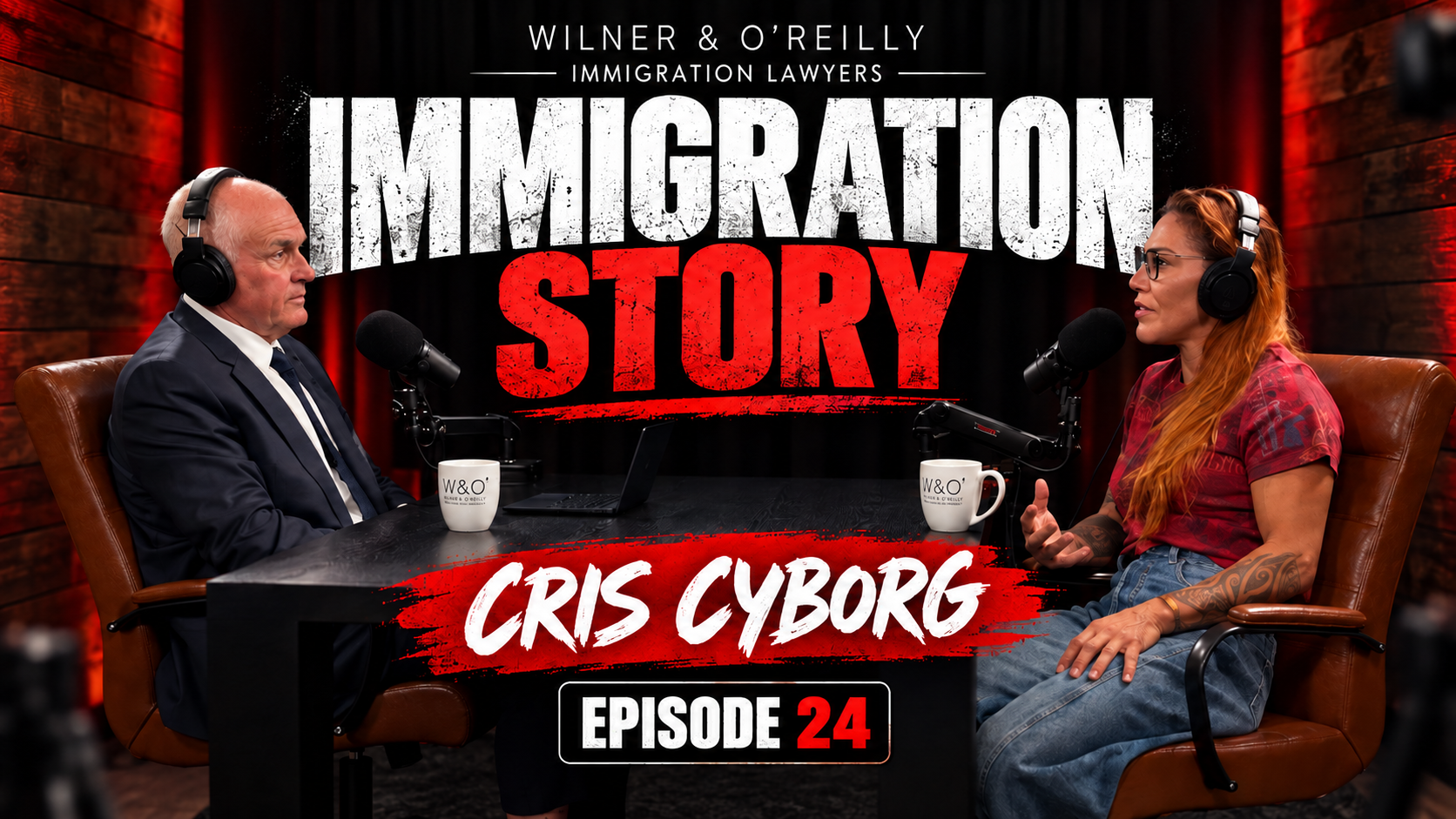
Cris Cyborg’s career has taken her from Brazil to some of mixed martial arts’ biggest stages. Behind the fights, training camps, and championship belts was another demanding process: building a life in the United States through an athlete’s visa, permanent residence, and citizenship.
In Episode 24 of the ImmiGreat Podcast, Richard Wilner sits down with Cris to explore the immigration story behind her legendary career. Their conversation also touches on faith, family, community service, and the discipline of planning for life beyond competition.
This article summarizes Episode 24 and provides general educational information. An individual’s visa, green card, or naturalization options depend on the facts and applicable law.
From Brazil to the U.S.: Opportunity Required a Plan
Cris recalls how limited opportunities for women fighters in Brazil made it difficult to compete regularly early in her career. Her first U.S. fight in 2008 exposed her to a larger market and new possibilities for training.
She wanted to improve her English, boxing, and wrestling while developing her career. Returning for major fights, including her 2009 bout with Gina Carano, meant coordinating training with the documents and travel arrangements needed to work in the United States.
Richard remembers helping with her early immigration process. The interview shows how the work behind an international athletic career extends well beyond the gym.
The Immigration Work Behind Fight Camp
Cris describes the stress of consular appointments during a period when she also needed to focus on training, weight management, and staying healthy. A promotional contract helped document her professional plans and the support behind her U.S. activities.
These are her experiences, rather than a checklist that applies identically to every athlete. Visa categories have different requirements, and travel, petition approvals, visa issuance, and permission to work should be evaluated together.
For an athlete planning a U.S. competition or training schedule, the practical lesson is to address immigration questions early. A fight contract or an invitation to compete should be reviewed alongside the immigration arrangements needed for the proposed activities.
Building an Immigration Record Alongside a Career
Richard explains that Cris later pursued a green card based on her own accomplishments. Their discussion highlights an important habit for athletes: preserve evidence as the career develops, rather than trying to reconstruct it years later.
Cris encourages listeners to keep records of their first titles, medals, interviews, and newspaper or magazine coverage. A career’s public achievements can become part of the documentation counsel reviews when assessing immigration options.
For general context, the extraordinary-ability immigrant classification described in 8 U.S.C. § 1153(b)(1)(A) includes athletics and requires sustained national or international acclaim, extensive documentation, and other statutory conditions. Recognition alone does not establish that every requirement is met. This article does not identify Cris’s specific temporary visa category or replace a review of any applicant’s records.
Tax Compliance Is Part of the Conversation
Cris and Richard also discuss the financial responsibilities that come with an international career. Athletes may rely on managers, agents, and advisers, but they still need to understand how their income and tax obligations are being handled.
Richard cautions that tax issues can affect a naturalization case. The discussion is a reason to gather records and seek appropriate immigration and tax advice, rather than assume that an adviser has resolved everything. A tax problem should be assessed individually; the episode should not be read as saying that every unpaid balance automatically requires denial.
Citizenship Meant More Than a New Document
Richard recalls Cris becoming a U.S. citizen in December 2016. For Cris, citizenship represented gratitude, responsibility, and opportunities that could reach beyond her own career to future generations.
Her account emphasizes persistence, honesty, learning, and respect for the process. A temporary visa, permanent residence, and naturalization are distinct stages. Completing one does not automatically complete the next; naturalization has its own legal requirements.
A Legacy Beyond Championship Belts
The interview also reveals what Cris hopes people remember beyond competition. She discusses teaching martial arts and self-defense, helping women and children, and supporting community projects in Brazil and Africa.
Faith is central to how she describes her journey and her desire to help others. She also talks about a farm project in Brazil, her interest in veterinary work, and preparing financially for life after fighting. The conversation presents these as goals and plans, rather than an announcement of retirement.
Cris credits difficult periods and setbacks with teaching her to stay humble and keep learning. Her message applies to immigration planning as well as athletic training: improvement requires listening, preparation, and a willingness to address problems.
Practical Lessons From Episode 24
- Keep your evidence: Save competition results, awards, contracts, interviews, and coverage that document your work and recognition.
- Plan before travel: Discuss the activities you intend to perform, upcoming dates, and the relevant immigration requirements with counsel.
- Understand your responsibilities: Coordinate immigration advice with appropriate tax and financial guidance.
- Think beyond the next milestone: Consider both your immediate career goals and the longer-term immigration and personal plans.
- Stay open to learning: Seek qualified advice and avoid assuming that another person’s successful path guarantees the same result.
Frequently Asked Questions
What is Episode 24 about?
Cris Cyborg joins Richard Wilner to discuss her journey from Brazil to a U.S. athletic career, permanent residence, and citizenship, along with lessons about preparation, faith, and giving back.
When did Cris Cyborg become a U.S. citizen?
In the interview, Richard recalls her naturalization in December 2016, and Cris describes the significance of citizenship for her life and family.
Does athletic success automatically qualify someone for a green card?
No. Achievements can be relevant evidence, but an applicant must meet the requirements of the applicable immigration category. Counsel should review the full record.
Watch or Listen to ImmiGreat Episode 24
Watch the interview above or listen to The Immigration Story Behind Cris Cyborg’s Legendary Career below.
Watch Episode 24 on YouTube or visit the episode on Buzzsprout.
Discuss Your Immigration Goals With Wilner & O’Reilly
If you are an athlete, artist, or professional exploring U.S. immigration options, contact Wilner & O’Reilly to discuss your background and goals. For more conversations about immigration and the decisions behind it, browse the ImmiGreat Podcast articles.
About the ImmiGreat Podcast
Hosted by Richard Wilner, the ImmiGreat Podcast explores immigration law and the experiences of people building lives and careers in the United States. Episode 24 brings that perspective to Cris Cyborg’s story, from the paperwork behind her athletic career to the impact she hopes to make beyond the sport.
Comments are closed.