

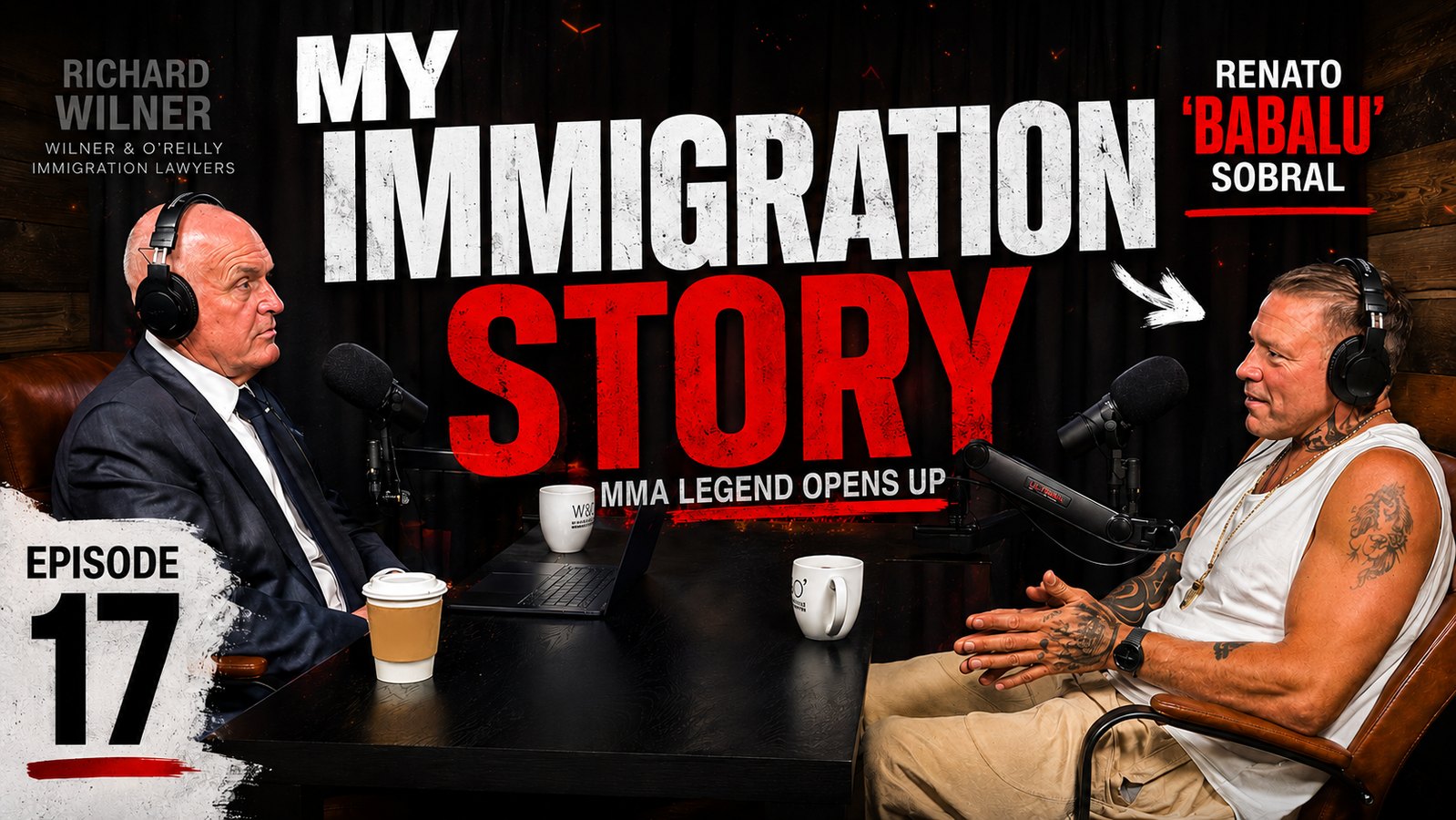
In Episode 17 of the ImmiGreat Podcast, Richard Wilner sits down with former UFC title challenger, Strikeforce Light Heavyweight Champion, and Brazilian wrestling legend Renato “Babalu” Sobral for a conversation that goes far beyond mixed martial arts.
Babalu’s story is one of planning, perseverance, and opportunity. He arrived in the United States as a professional athlete on a P-1 visa, later obtained a green card based on his extraordinary ability, became a U.S. citizen, built a successful martial arts academy, and raised a family whose achievements reflect the opportunities he worked so hard to create.
For anyone considering immigration to the United States, this episode offers a powerful reminder that immigration is not just about obtaining legal status – it’s about creating opportunities for future generations.
From Wrestling Champion in Brazil to the UFC
Before becoming known around the world as “Babalu,” Renato Sobral had already established himself as one of Brazil’s top wrestlers.
He began wrestling at just nine years old and went on to become Brazilian Wrestler of the Year before transitioning into mixed martial arts. Throughout the conversation, Babalu explains how wrestling shaped his discipline, work ethic, and competitive mindset long before he ever stepped into the UFC Octagon.
Those lessons would ultimately help him build not only a successful fighting career but an entirely new life in the United States.
Coming to America on a P-1 Athlete Visa
As his MMA career grew, Babalu began competing regularly in the United States.
Richard explains that Babalu initially entered the country using a P-1 athlete visa, the nonimmigrant visa category designed for internationally recognized athletes.
Unlike many immigration stories, Babalu recalls that his visa process was relatively straightforward because his management team ensured his documentation was complete before submission.
The episode illustrates an important point Richard often emphasizes throughout the ImmiGreat Podcast:
Preparation matters.
Whether someone is a professional athlete or a business executive, careful planning before filing immigration paperwork can make the process significantly smoother.
Why He Chose to Build His Future in America
Although Babalu originally traveled to the United States primarily to compete, his long-term goals eventually shifted.
He explains that after marrying his wife, Natasha, and becoming a father, he began thinking beyond fighting.
He wanted better educational opportunities for his children, greater long-term stability, and the ability to build a future outside of professional sports.
Rather than continuing to divide his life between Brazil and the United States, he decided to make America home.
His decision reflects a common theme among many immigrants: the choice to immigrate is often driven less by personal ambition than by creating opportunities for the next generation.
From Athlete Visa to Green Card to U.S. Citizenship
Richard and Babalu discuss the next phase of his immigration journey.
After competing professionally, Babalu pursued permanent residence through an employment-based green card strategy focused on extraordinary ability.
His accomplishments in wrestling, Brazilian Jiu-Jitsu, and mixed martial arts made him eligible to seek a green card based on his achievements. USCIS describes EB-1 first preference immigration as including individuals with extraordinary ability in fields such as athletics, arts, business, education, and science.
Years later, after meeting the statutory requirements for naturalization, he became a United States citizen.
Looking back, Babalu describes becoming a U.S. citizen as one of the proudest moments of his life.
He recalls the naturalization ceremony as feeling “reborn” and explains that citizenship represented security – not just for himself, but for his entire family.
Raising the Next Generation
One of the most inspiring parts of the interview focuses on Babalu’s daughters.
His oldest daughter graduated from the University of California, Berkeley and is pursuing a Ph.D. in Educational Psychology.
His youngest daughter has become a standout high school basketball player after first excelling in Brazilian Jiu-Jitsu.
Babalu credits much of their success to discipline, education, and the opportunities available through their life in the United States.
He also speaks candidly about the sacrifices required to create those opportunities, explaining that his daughters now understand the effort it took to build their family’s future.
The Immigrant Mindset
One of the most memorable moments in the episode comes when Richard asks whether Babalu believes in what many describe as the “immigrant mentality.”
His answer is unequivocal.
He believes immigrants often arrive with a determination to work harder, overcome obstacles, and create opportunities that may not have existed in their home countries.
For Babalu, that mentality extends beyond career success.
It means teaching discipline, responsibility, gratitude, and resilience to the next generation.
Those values have become central to both his family and his martial arts academy.
Life After Professional Fighting
Retirement from competition did not mark the end of Babalu’s career – it marked the beginning of a new purpose.
Today he owns Babalu’s Iron Gym in Cerritos, California, where he teaches martial arts to children and adults.
Rather than viewing teaching as work, he describes it as an opportunity to share knowledge, build confidence, and positively influence young people.
Helping students develop self-confidence and discipline has become just as meaningful as winning championships ever was.
Planning Is the Key to Immigration Success
As the interview concludes, Richard asks Babalu what advice he would offer to others considering immigration to the United States.
His answer echoes a theme that has appeared throughout many ImmiGreat Podcast episodes:
Plan ahead.
Babalu explains that immigrants today have access to more information than ever before. By understanding the process, gathering the necessary documentation, and preparing in advance, applicants place themselves in a much stronger position for success.
Richard notes that this advice applies not only to athletes, but also to employers, families, entrepreneurs, students, and anyone pursuing immigration benefits.
Key Takeaways
Episode 17 highlights the long-term impact legal immigration can have on individuals and families.
Key lessons include:
- Preparation is one of the most important parts of any immigration case.
- A P-1 athlete visa can provide an important pathway for internationally recognized athletes.
- Extraordinary ability may provide opportunities for permanent residence.
- U.S. citizenship and naturalization can represent long-term security and stability.
- Immigration is often about creating opportunities for future generations.
- Planning and discipline remain essential throughout the immigration process.
Related Wilner & O’Reilly Resources
- Nonimmigrant Visa Options for Athletes, Coaches, and Staff
- EB-1A Foreign Nationals of Extraordinary Ability: The Basics & FAQ
- Employment-Based Green Cards Explained | ImmiGreat Episode 10
- Rafael Cordeiro Immigration Story | ImmiGreat Podcast Episode 11
Watch or Listen
Watch the full Episode 17 here
Need Help With an Athlete Visa or Employment-Based Green Card?
Whether you are an athlete, coach, entrepreneur, or professional seeking employment-based immigration options, experienced legal guidance can help you understand your eligibility and develop a long-term immigration strategy.
Contact Wilner & O’Reilly:
https://www.wilneroreilly.com/contact/
Read more immigration updates:
https://www.wilneroreilly.com/blog/
About the ImmiGreat Podcast
The ImmiGreat Podcast, hosted by Richard Wilner, explores the legal and personal journeys behind U.S. immigration. Through conversations with immigrants, employers, entrepreneurs, athletes, and legal professionals, the podcast provides practical insight into visas, green cards, citizenship, and the opportunities that legal immigration can create.
Episode 17 demonstrates that successful immigration is not simply about obtaining legal status – it is about careful planning, perseverance, and building a lasting legacy for future generations.
Comments are closed.